Collection: Bitaxe Gamma

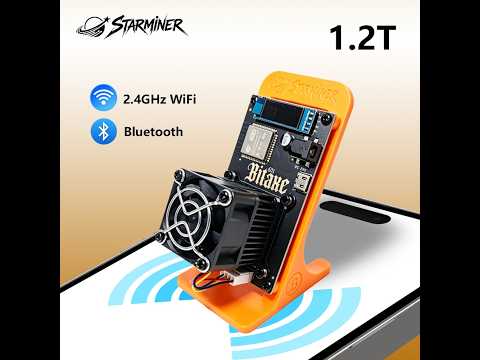
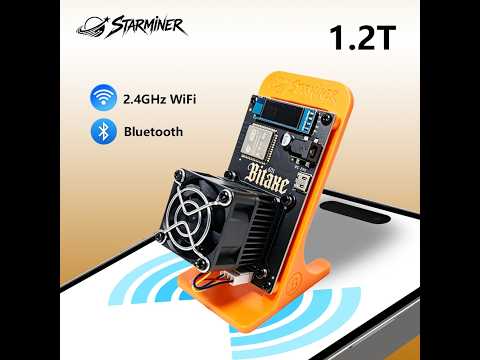
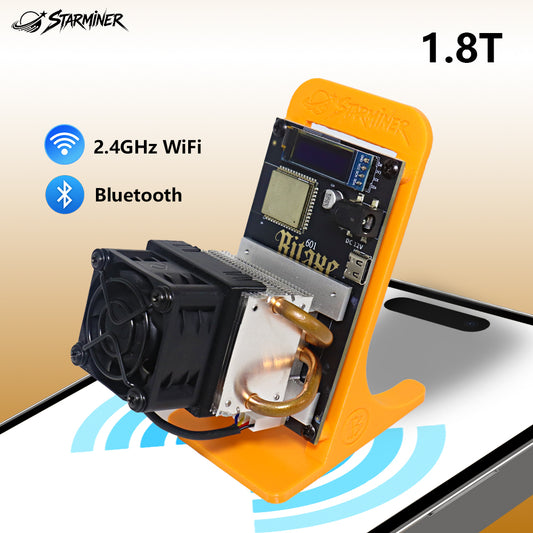
Compare Bitaxe Gamma 601 miners from 1.2 to 1.8 TH/s using the exact product specifications and verified test conditions. The Gamma 601 is a compact BM1370-based, single-chip Bitcoin miner commonly used for learning and solo-mining experiments. The 1.2T, 1.5T and 1.8T listings represent different performance targets, but wall power, temperature, sound and long-term stability must be evaluated for each operating profile. Review the included power supply, cooling, firmware, Wi-Fi setup and current price before choosing a Bitaxe Gamma.


How to choose and set up a Bitaxe Gamma 601

  1.  Choose the target hashrate without assuming the highest profile is best for every room.
  2. Compare measured wall power, temperature and sound for the exact profile.
  3. Confirm the included power supply, cable, fan, stand and firmware version.
  4.  Connect Wi-Fi and enter the wallet and compatible pool settings.
  5. Begin with a supported stable profile and monitor accepted shares, temperature and hardware errors.

Frequently Asked Questions

1. What performance can I expect from the Bitaxe Gamma 601 1.5T?

The Star Miner Bitaxe Gamma 601 1.5T is configured for approximately 1.5 TH/s with rated power consumption of about 26 W and efficiency of approximately 17.4 J/TH.

Hashrate naturally fluctuates during operation, so the value displayed at any particular moment may be above or below 1.5 TH/s. Review average hashrate, accepted shares and hardware-error rate over several hours. Actual performance can also be affected by ambient temperature, Wi-Fi stability, pool latency, firmware and individual chip variation.

2. What is the difference between the 1.2T, 1.5T and 1.8T Bitaxe models?

The three versions are intended for different performance priorities. The 1.2T version focuses on lower power consumption, while the 1.8T version targets higher hashrate and requires greater cooling and power headroom.

The Gamma 601 1.5T version provides a balance between hashrate, approximately 26 W rated power consumption and approximately 17.4 J/TH efficiency. It is suitable for customers who want more hashing power than the 1.2T version without selecting the most performance-focused configuration.

Performance is affected by cooling, firmware, power-supply efficiency and chip variation, so a higher rated version does not guarantee continuous fixed hashrate or mining rewards.

3. How do I set up the Bitaxe Gamma 601 1.5T?

After connecting the power supply, use a phone or computer to join the temporary Wi-Fi network displayed by the miner. Open the local configuration page and enter your 2.4 GHz Wi-Fi credentials, a compatible mining-pool address and your Bitcoin receiving address.

Once the miner joins your home network, you can use the AxeOS web interface to monitor hashrate, temperature, fan speed, power and accepted shares. A separate mining computer is not required for normal operation.

The Bitaxe Gamma 601 generally requires 2.4 GHz Wi-Fi. If your router combines 2.4 GHz and 5 GHz under one network name and the connection fails, create a separate 2.4 GHz network and try again.

4. Is the Bitaxe Gamma 601 1.5T suitable for continuous home mining?

Yes. Its compact design, approximately 26 W rated power consumption and approximately 30 dB listed noise level make it considerably easier to operate at home than a full-size industrial ASIC miner.

It still produces heat and fan noise, and actual sound levels can change with fan speed and room temperature. Place the miner in a dry, ventilated location with clear space around the air intake and exhaust. Avoid enclosed cabinets, direct sunlight and nearby heat-producing equipment.

For continuous operation, regularly check both ASIC and voltage-regulator temperatures in AxeOS. The product’s stated operating range is 5–40°C, but maintaining good airflow and a moderate room temperature can support more stable performance.

5. Can the Bitaxe Gamma 601 1.5T mine Bitcoin solo, and is a reward guaranteed?

Yes. The Bitaxe Gamma 601 uses the SHA-256 algorithm and can connect to a compatible Bitcoin solo pool, supported payout pool or properly configured personal mining node.

For solo mining, use a valid Bitcoin receiving address that you control and follow the selected pool’s connection instructions. A nearby, reliable pool server can help reduce latency and rejected shares.

Solo mining is probability-based. Running at approximately 1.5 TH/s provides more attempts than a lower-hashrate miner, but it cannot guarantee a block, fixed payout or regular income. This miner is most appropriate for home-mining enthusiasts who value low-power operation, open-source hardware, learning and participation in Bitcoin’s decentralized network.